
From Scheduling Chaos to Predictable Coverage: The Measurable Impact of AI Chat Bot Automation in Home Care
At 4:45 PM, a caregiver calls out.
For many home care agencies, that single call can trigger:
• 5–12 outbound calls or texts
• 30–90 minutes of scheduler time
• Overtime risk
• A potential missed visit
Multiply that by dozens of open shifts per week, and the cost compounds quickly.
Most agencies underestimate what manual scheduling truly costs — not just in payroll, but in lost revenue, referral hesitation, caregiver burnout, and operational instability.
This is no longer just a workflow issue. It’s a margin issue.
The Hidden Cost of Manual Scheduling
In a typical agency:
• Schedulers spend 3–5 hours per day managing shift coverage
• Urgent shifts require contacting multiple caregivers sequentially
• Time-to-fill can range from 45 minutes to several hours
• After-hours coverage often drives overtime
If a scheduler earning $50,000 annually spends even 50% of their time on coverage tasks, that’s $25,000 per year tied up in reactive outreach.
Manual scheduling works — but only through constant human effort. That model doesn’t scale.
The Shift: From Sequential Outreach to Predictive Matching
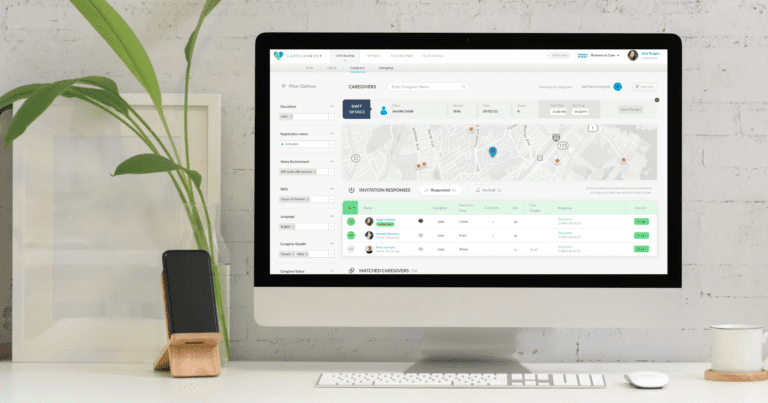
AI-powered chat bot scheduling replaces reactive dialing with automated, probability-based matching.
Instead of contacting caregivers one by one, the system:
• Identifies qualified caregivers instantly
• Ranks them by likelihood of acceptance
• Sends structured two-way messages simultaneously
• Confirms coverage in real time
• Updates the schedule automatically
• Escalates only when probability drops
Schedulers move from performing every action to supervising intelligent automation.
Time-to-Fill: The First Measurable Win
Reducing average time-to-fill by 30–50% can:
• Accelerate referral acceptance
• Reduce after-hours scrambling
• Minimize missed visits
• Improve census stability
Speed protects revenue.
The Financial Impact: A Simple Model
Consider a mid-sized agency:
• 40 open or changed shifts per week
• 20–40 minutes of manual coordination per shift
• Average scheduler cost: $25/hour
That’s $22,000–$35,000 annually in coordination labor alone, excluding overtime.
Automation can reduce manual outreach, overtime, and coverage gaps — while increasing fill rates, referral confidence, caregiver engagement, and scalability without proportional headcount growth.
The Bottom Line
If your scheduling team is constantly sprinting to fill last-minute gaps, it’s not a personnel issue — it’s a systems design issue.
AI chat bot scheduling removes repetitive friction so teams can focus on care coordination, recruiting strategy, retention, and growth.
Predictable coverage is no longer a luxury. It’s a competitive advantage.